Back to School – Hello Preschool SVG: A Practical Choice for Early Learning Projects
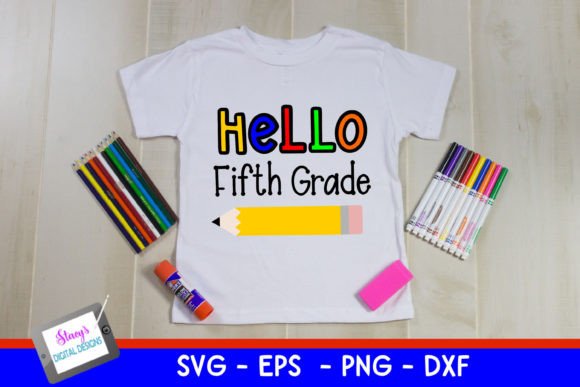
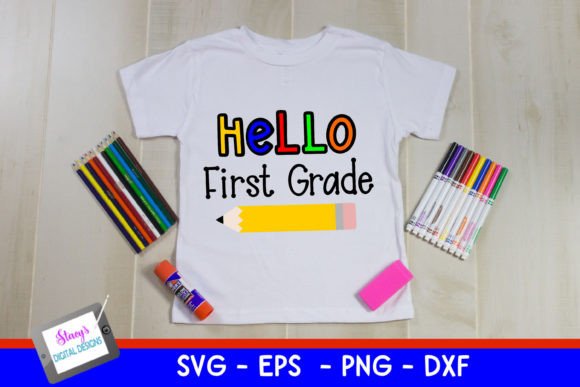
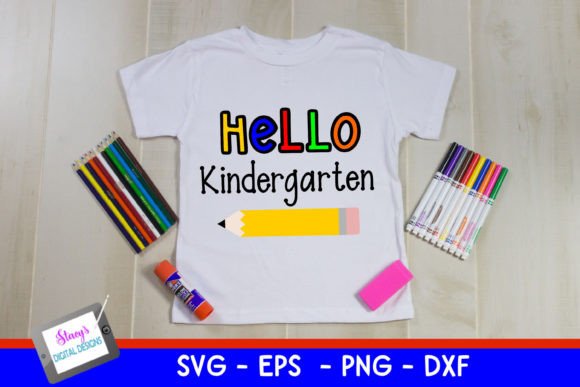
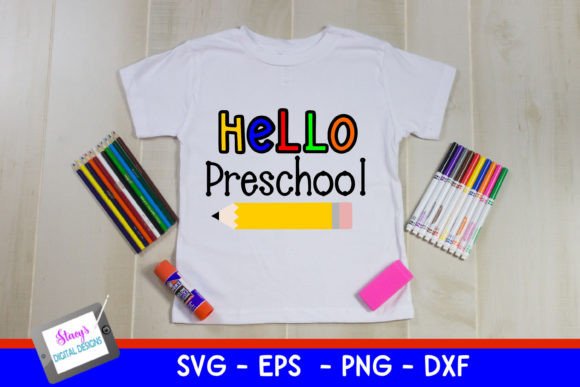
When preparing for the preschool transition—whether it’s a child’s first classroom experience or a return after summer break—personalized, age-appropriate design elements matter. The Back to School – Hello Preschool SVG from Stacy’s Digital Designs is a focused digital asset designed specifically for this milestone. It features clean, friendly typography with the phrase “Hello Preschool” and a subtle clip art pencil motif—neither overly childish nor too mature, striking a balance appropriate for 3- to 5-year-olds. Unlike generic back-to-school bundles, this file set centers on early education identity, making it especially useful for welcome signs, classroom labels, parent handouts, or keepsake crafts.
What Sets This SVG Apart From Broader Back-to-School Collections
Many digital design libraries offer large seasonal packs—dozens of SVGs covering everything from college dorm decor to high school spirit wear. The Back to School – Hello Preschool SVG takes a narrower, more intentional approach. Its specificity is its primary differentiator: it avoids visual clutter, avoids grade-level ambiguity (e.g., no “Kindergarten Ready” or “Grade 1” phrasing), and uses proportionally generous spacing and rounded letterforms that support early literacy recognition. That focus means it works well where broader collections often fall short—on small-name tags, laminated cubby labels, or toddler-sized tote bags where clarity and scale are non-negotiable.
It also includes four core file formats in one zip: SVG, PNG, DXF, and EPS. This isn’t just about compatibility—it reflects thoughtful format coverage across common use cases. SVG remains ideal for Cricut Design Space and Silhouette Studio users who need scalable vector paths for cutting. PNG delivers crisp raster output for printing or digital newsletters—especially helpful if you’re designing a welcome slide deck or printable activity sheet. DXF supports older or industrial-grade cutters (like some Roland or Graphtec machines), while EPS offers legacy compatibility with Adobe Illustrator workflows still used in print shops or school communications offices.
Comparing File Format Utility Across Real-World Scenarios
The inclusion of multiple formats matters less as a marketing feature and more as a functional safeguard. Consider these realistic examples:
- A homeschool parent using a Cricut Explore Air 2 will rely primarily on the SVG file for vinyl-cut name tags—but may pull the PNG into Canva to overlay on a photo for a digital “First Day” announcement.
- A preschool teacher ordering custom-printed t-shirts through a local vendor might send the EPS file to ensure text remains sharp at garment-print size, while using the DXF version to cut iron-on designs on a hobby-grade cutter.
- A PTA volunteer designing a bulletin board display may import the PNG into Microsoft PowerPoint for quick resizing and annotation—avoiding vector software entirely.
Not all preschool-themed SVGs include this range. Some vendors offer only SVG + PNG, limiting flexibility for users working outside mainstream craft platforms. Others supply only raster files, which become pixelated when enlarged beyond standard print sizes. The Back to School – Hello Preschool SVG avoids both pitfalls—not by overloading the package, but by covering foundational formats without redundancy.
Strengths and Situational Fit
This design excels where simplicity, readability, and developmental appropriateness converge. Its strengths include:
- Age-aligned tone: No cutesy slang (“Preschool Palooza”) or academic pressure (“Get Ready to Learn!”). “Hello Preschool” conveys warmth and invitation—not expectation.
- Cutting-friendly construction: Letters are fully outlined, not outlined-and-filled, reducing weeding time for vinyl projects. The pencil icon is a single-layer silhouette, avoiding nested layers that complicate cut settings.
- Neutral color adaptability: Because it’s vector-based and uncolored, users can apply any palette—soft pastels for a Montessori setting, bold primaries for a Head Start center, or grayscale for accessible printed materials.
It fits best when the goal is consistency and calm: labeling cubbies, creating reusable name cards, designing low-stimulus welcome posters, or personalizing backpack tags. It’s equally effective for families building routines at home and educators establishing classroom culture.
Limitations and When to Look Elsewhere
No single design asset meets every need—and understanding where the Back to School – Hello Preschool SVG reaches its limits helps avoid mismatched expectations.
It does not include alternate phrases (e.g., “Welcome to Preschool,” “My First Preschool Year”), multilingual versions, or editable text fields for names or dates. If your project requires dynamic personalization—say, generating 20 unique student name tags with individual photos—the SVG would need manual editing per file, which may be time-prohibitive without batch-processing tools.
It also lacks decorative borders, background patterns, or thematic extensions (e.g., apples, backpacks, or alphabet motifs). For environments where visual richness supports engagement—like a busy hallway display or a themed orientation packet—you may want to layer it with complementary elements, rather than rely on it alone.
Finally, while the included formats cover most consumer and small-organization needs, advanced users requiring AI-native assets (e.g., layered Illustrator files with named groups), font-replacement options, or web-optimized SVGs with inline CSS styling won’t find those here. Those requirements point toward custom design services or specialized template libraries—not single-purpose SVGs like this one.
Making the Right Choice Based on Your Workflow and Goals
Choosing the Back to School – Hello Preschool SVG comes down to alignment—not just with a theme, but with how you work and what you aim to accomplish. Ask yourself:
- Is clarity more important than decoration? If yes, this SVG’s minimalism serves that priority well.
- Do you regularly switch between cutting, printing, and digital publishing? The multi-format bundle reduces friction across those tasks.
- Are you supporting children just beginning formal group learning? Then the gentle, non-academic tone aligns with early childhood development principles.
- Do you need scalability across dozens of variations—or deep customization out of the box? If so, evaluate whether built-in flexibility matches your capacity for manual editing.
For many parents, teachers, and small educational providers, the value lies in reliability: a tested, ready-to-use file that works across platforms without requiring design expertise. It doesn’t replace thoughtful planning—but it removes one variable from the preparation process. That practicality becomes especially meaningful during August, when time is tight and energy is stretched across logistics, supplies, and emotional readiness.
In contrast, if your context calls for bilingual signage, accessibility-compliant contrast ratios, or integration into a larger branded system (e.g., matching district fonts or colors), you’ll likely need to supplement this SVG—or consider a custom solution. Similarly, if your machine only accepts proprietary formats (e.g., certain Brother ScanNCut files), verify compatibility before purchase, even with the included DXF and EPS options.
Ultimately, the Back to School – Hello Preschool SVG stands out not because it does everything, but because it does one thing well: offering a grounded, versatile, and developmentally thoughtful starting point for welcoming young learners. Its usefulness grows when matched with realistic expectations—not as a standalone solution, but as a consistent, adaptable component within a broader preparation strategy.