Back to School Math Workbook for Kids: A Practical Resource for Early Learning and Skill Building
A Back to School Math Workbook for Kids is a targeted educational tool designed to support foundational numeracy development in children aged 3–9. Unlike broad academic textbooks or digital apps, this workbook blends structured practice with creative expression—integrating math concepts like counting, number recognition, simple addition, shape identification, and pattern completion into coloring, tracing, and drawing activities. Its 10-page format is intentionally concise, prioritizing focused engagement over volume, making it especially suitable for short attention spans, home-based learning routines, or supplemental classroom use.
What Sets This Workbook Apart From Other Early Learning Materials
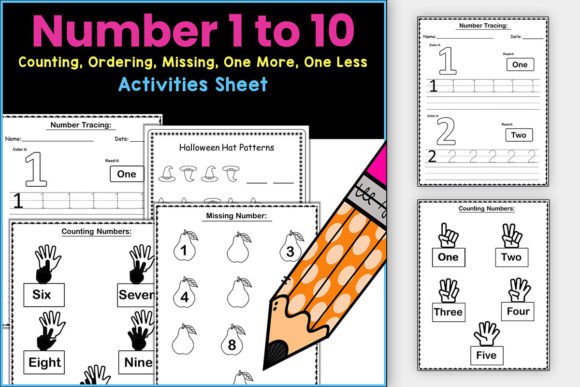
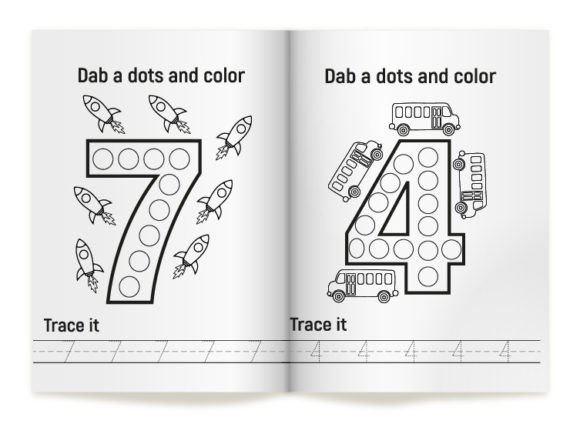
The Back to School Math Workbook for Kids distinguishes itself through intentional design choices that align with developmental milestones. It includes pages dedicated to pen control (e.g., tracing lines and shapes), cursive writing practice, and number formation—all embedded within themed, child-friendly illustrations of kids, school scenes, and everyday learning moments. Rather than isolating math as abstract symbols, the workbook situates numbers and operations in visual, tactile contexts: counting apples in a lunchbox, matching shapes to classroom objects, or tracing numerals alongside corresponding dot patterns. This multisensory scaffolding supports memory retention and conceptual understanding more effectively than rote worksheets alone.
Its physical specifications—8.5 x 11 inches, print-ready PDF, and high-resolution JPG/PNG source files—are practical considerations for caregivers and educators who need flexibility. Whether printing at home, uploading to KDP for resale, or adapting pages for classroom projection, the file suite accommodates multiple workflows without requiring additional formatting.
How It Compares With Broader Categories of Learning Resources
When evaluating early learning tools, parents and educators often consider several overlapping categories: traditional workbooks, digital learning platforms, activity-based kits, and open-ended creative resources. The Back to School Math Workbook for Kids occupies a middle ground—more structured than free-form coloring books, yet more engaging than standard drill-and-kill math sheets.
- Compared to full-curriculum workbooks: Most comprehensive grade-level workbooks span 100+ pages and cover reading, writing, science, and math. While thorough, they can feel overwhelming for daily use with younger learners. This workbook’s 10-page scope allows consistent, low-pressure practice—ideal for establishing routine without burnout.
- Compared to digital apps: Apps offer interactivity and instant feedback but require screen time, device access, and sometimes subscription fees. The Back to School Math Workbook for Kids supports offline, screen-free learning—a meaningful tradeoff for families limiting digital exposure or navigating inconsistent internet access.
- Compared to manipulative-based kits (e.g., counting bears, abacuses): Hands-on tools build concrete understanding but require setup, storage, and adult facilitation. This workbook offers independence: children can color, trace, and solve with minimal guidance, supporting self-directed learning during quiet time or sibling-led play.
Strengths and Realistic Tradeoffs
One of the strongest assets of the Back to School Math Workbook for Kids is its adaptability across age and ability levels. A preschooler might focus on tracing numbers 1–5 and identifying circles and squares, while a second grader could use the same pages for reinforcing place value concepts by extending counting sequences or adding simple word problems in the margins. The inclusion of cursive writing practice adds cross-domain utility—not every math resource also builds fine motor and literacy skills simultaneously.
However, limitations exist. Because it contains only 10 pages, it is not intended as a year-long curriculum replacement. Families seeking sustained, progressive skill-building will need to pair it with other materials—or repeat pages thoughtfully, using them as templates for variation (e.g., asking a child to draw five more stars after completing a counting page). It also assumes basic pencil control; very young toddlers may need modeling or modified tools (chunky crayons, grip aids) before fully benefiting from tracing exercises.
Another consideration is content depth. While it introduces foundational ideas clearly, it does not include answer keys, teaching notes, or differentiation suggestions. Educators accustomed to standards-aligned lesson plans may need to supplement with instructional framing. For home use, though, many caregivers find the simplicity an advantage—no prep required, just print and go.
Best-Fit Situations: When This Workbook Fits—and When It Doesn’t
The Back to School Math Workbook for Kids is particularly well-suited for specific scenarios:
- Transition support: Children adjusting to preschool or kindergarten benefit from familiar, low-stakes routines. Using this workbook for 10 minutes each morning helps signal “learning time” without pressure.
- Summer learning maintenance: As a lightweight alternative to intensive summer packets, it keeps math thinking active without triggering resistance—especially when paired with real-world tasks like counting steps, sorting laundry, or measuring ingredients.
- Dual-purpose practice: Homeschooling families or therapists working on both motor and cognitive goals appreciate resources that serve more than one objective. Tracing letters while solving a simple equation, for example, reinforces neural connections across domains.
- Classroom warm-ups or station rotations: Teachers can print individual pages for quick, differentiated entry tasks—especially useful when managing mixed-grade or mixed-ability groups.
Conversely, this workbook may be less appropriate if you need:
- Assessment tools (e.g., pre/post tests, progress tracking charts)
- Extensive problem variety (e.g., multi-step word problems, fractions, or geometry beyond basic shapes)
- Audio or interactive components for auditory or kinesthetic learners
- Content aligned to specific state or national standards (e.g., Common Core grade-level benchmarks)
Making an Informed Choice Among Alternatives
Choosing the right resource depends less on finding a “best” option and more on matching features to your context. Ask yourself:
- What is the primary goal? If reinforcing number sense and fine motor coordination in a relaxed way, the Back to School Math Workbook for Kids delivers efficiently. If preparing for standardized assessments, you’ll likely need more rigorous, standards-mapped materials.
- What constraints exist? Limited printing capability? Screen fatigue? Time scarcity? Its PDF-first format and compact size respond directly to those realities.
- How does it integrate with what you’re already doing? Many users layer it alongside read-alouds, nature walks, or cooking projects—using the workbook as one thread in a broader tapestry of learning rather than a standalone solution.
In practice, families often combine resources: using this workbook for morning seatwork, a counting app for afternoon review, and hands-on games during weekend play. That layered approach reflects how learning actually happens—iteratively, multimodally, and in response to interest and readiness—not through single-product solutions.
Final Considerations for Evaluation and Use
Before adopting any learning material, observe how your child engages with it. Does the Back to School Math Workbook for Kids invite curiosity—or frustration? Are pages completed with focus, or abandoned mid-task? Small adjustments—like sitting together for the first few pages, offering verbal prompts instead of corrections, or letting your child choose which page to start with—can significantly affect outcomes.
Also consider longevity. While 10 pages may seem brief, high-quality paper and clear visuals support repeated use—especially when laminated or placed in sheet protectors for dry-erase practice. Some educators report reusing these pages across multiple cohorts, adapting instructions based on age and skill level.
Ultimately, the value of the Back to School Math Workbook for Kids lies not in replacing other tools, but in filling a distinct niche: accessible, joyful, and grounded practice that honors how young children learn best—through doing, seeing, and creating.